N4CB-II Opens 9th Training Edition on Two EU Accession Negotiation Clusters: “Green Agenda and Sustainable Connectivity” and “Resources, Agriculture and Cohesion”
06.08.2026
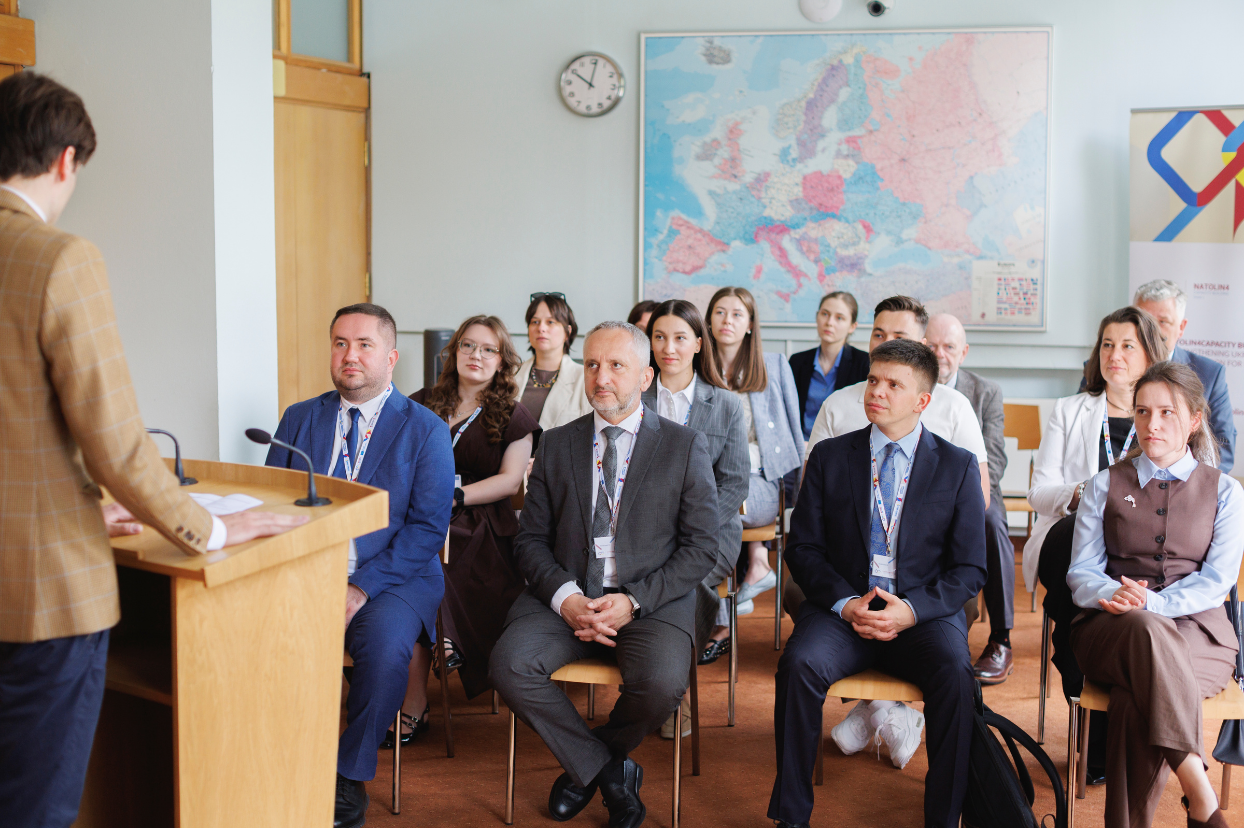
The EU-funded Natolin4Capacity Building Phase II (N4CB-II) project opened the 9th edition of the Tailored Onsite Knowledge and Analytical Skills Programme on European Integration on 27 July 2026 at the College of Europe in Natolin, Warsaw.
The new edition brings together nine representatives of Ukrainian central public administration bodies for six weeks of training focused on two EU accession negotiation clusters: Cluster 4 — “Green Agenda and Sustainable Connectivity” and Cluster 5 — “Resources, Agriculture and Cohesion”.
The programme continues until 4 September 2026 and covers institutional, legal and policy issues related to both negotiation areas. Its format combines academic sessions, workshops, teamwork, individual assignments, expert discussions and analytical research.
The participants were selected through a competitive process and represent:
- State Audit Service of Ukraine;
- State Customs Service of Ukraine;
- State Agency of Water Resources of Ukraine;
- Ministry of Economy, Environment and Agriculture of Ukraine;
- State Service of Ukraine for Transport Safety;
- Ministry for Communities and Territories Development of Ukraine;
- Government Office for Coordination of European and Euro-Atlantic Integration.
The launch of the 9th edition followed the completion of the programme’s 8th edition, focused on EU accession negotiation Cluster 3 — “Competitiveness and Inclusive Growth”.
The 8th edition concluded on 17 July 2026 with participants presenting analytical papers on issues linked to Ukraine’s EU accession. The final session completed six weeks of practice-oriented training combining workshops, expert discussions, teamwork and individual research.
The edition brought together ten representatives from nine Ukrainian central government bodies and public institutions: the Ministry of Education and Science, Ministry of Economy, Environment and Agriculture, Ministry of Youth and Sports, Ministry of Digital Transformation, Government Office for Coordination of European and Euro-Atlantic Integration, Verkhovna Rada, State Tax Service, Administration of the State Service of Special Communications and Information Protection, and State Customs Service.
The programme enabled participants to place their day-to-day responsibilities within the broader context of Ukraine’s EU accession process and to consider how EU legal and policy instruments could be applied in their institutions.
“For me, it was an opportunity to step back from my daily work and see the bigger picture. I mostly focus on implementing and analysing specific legal provisions, but here I was able to gain a better understanding of the entire EU accession process and Ukraine’s place within it,” said Alina Zakharchuk, Secretariat of the Verkhovna Rada of Ukraine.
Exchange with experts, lecturers and colleagues from different institutions formed another part of the learning experience.
“The personal benefit was communicating with other people—not only the participants, but also the mentors, lecturers and organisers. We met many people from different EU countries, and it was very interesting to learn about other countries’ experiences during their accession,” said Diana Mnatsakanian, Ministry of Digital Transformation of Ukraine.
Drawing on her experience at the College of Europe in Natolin, Viktoriia Voloshyna of the Ministry of Youth and Sports of Ukraine shared a message with the incoming group:
“Do not be afraid to ask questions. Participate actively in discussions and, of course, enjoy every moment—enjoy every moment here in the College of Europe in Natolin.”
With the completion of the 8th edition, 67 participants have graduated from the Tailored Onsite Knowledge and Analytical Skills Programme under the current phase of the project.
Natolin4Capacity Building Phase II — Strengthening Ukrainian Public Administration for EU Integration (N4CB-II) is funded by the European Union and jointly implemented by the College of Europe in Natolin and the High School of Public Governance, in cooperation with the Government Office for Coordination of European and Euro-Atlantic Integration and the National Agency of Ukraine on Civil Service, under the initiative of the Office of the Deputy Prime Minister for European and Euro-Atlantic Integration of Ukraine.
The project’s components include the Tailored Onsite Knowledge and Analytical Skills Programme on European Integration for selected Ukrainian public administration employees at the College of Europe in Natolin, a Training of Trainers module, customised e-learning courses on European integration, onsite intensive training sessions in Kyiv, and expert-led webinars on key EU integration topics.
For more information, please visit the project website or follow Natolin4CB on Facebook and LinkedIn.