The first Japan-Ukraine business forum, a $150 million reconstruction fund, and the launch of “Tysyachovesna”: 24 Create Ukraine participants present results of their work in government teams
14.07.2026
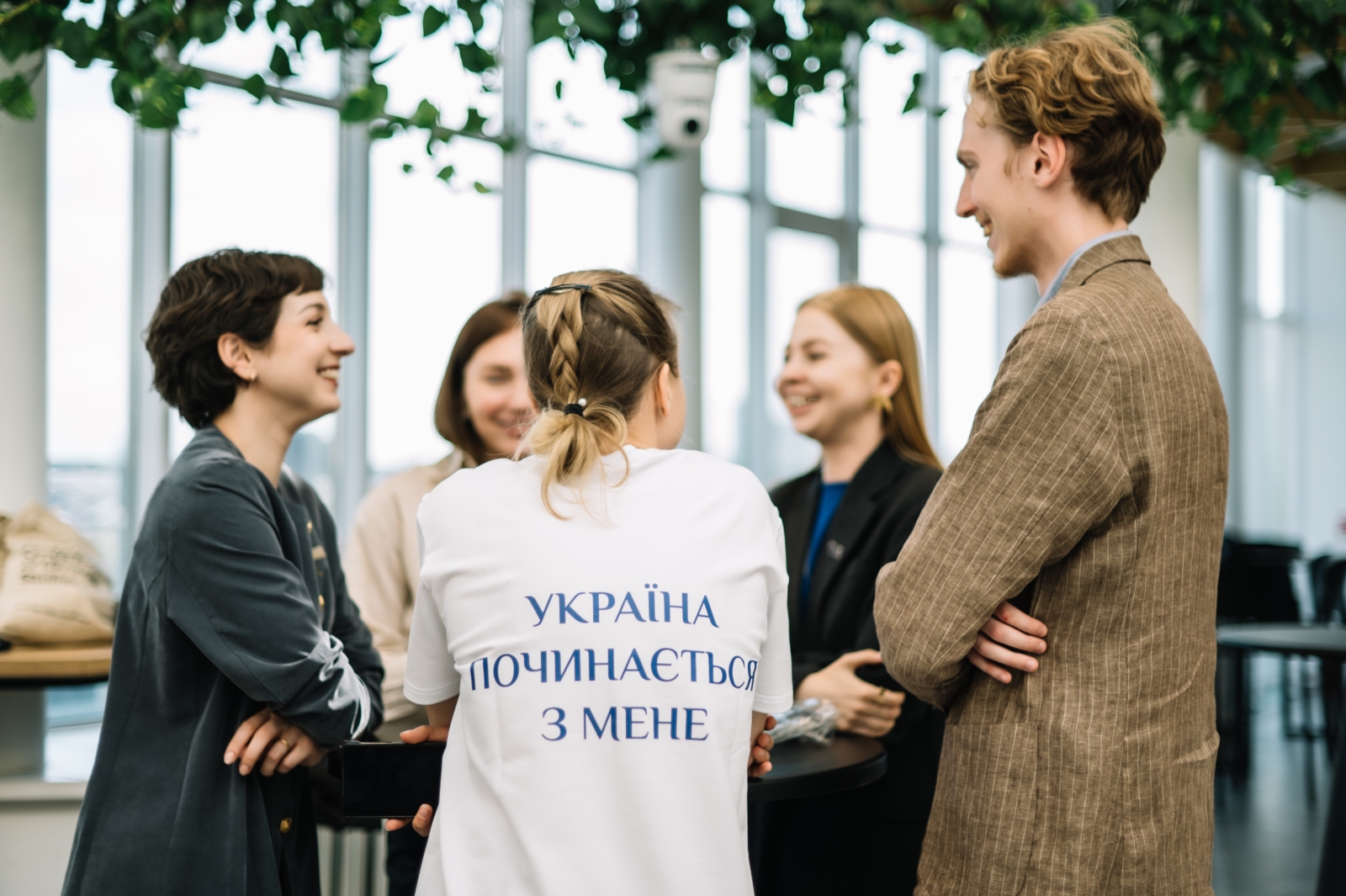
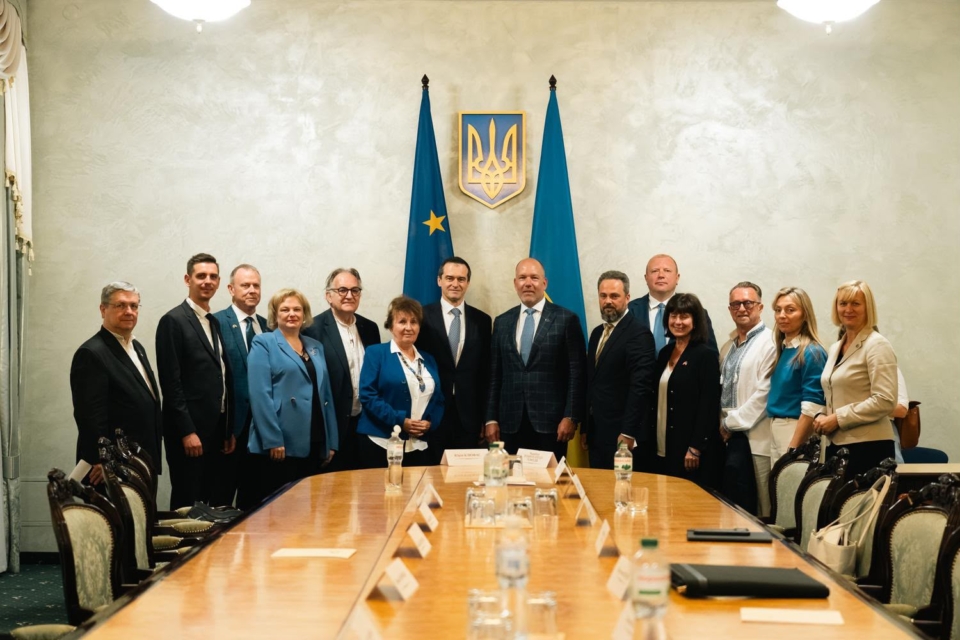
24 Ukrainian professionals who returned from abroad through the Create Ukraine programme have been working for six months in eight state institutions on reforms and strategic projects. On 13 July, they presented interim results of their work during a reporting session.
The programme continues to scale up — applications for the new stage of Create Ukraine are now open. Ukrainians abroad who want to contribute to the country’s development can apply by 14 August on the programme’s website.
Participants have strengthened Ukraine’s European integration efforts, including by analysing more than 200 provisions of the EU Directive 2006/123/EC on services in the internal market, launching the first Ukrainian-American Reconstruction Investment Fund, contributing to the development of government dashboards for monitoring international assistance, supporting the creation of a new funding model for Ukrainian cultural products “Tysyachovesna” and other initiatives.
Most projects have moved from the planning stage to practical implementation, with clear roadmaps, measurable KPIs, and concrete solutions to be delivered by the end of the year.
Tetyana Berezhna, Deputy Prime Minister for Humanitarian Policy of Ukraine – Minister of Culture and Strategic Communications:
“Human capital is the country’s greatest asset. Create Ukraine provides opportunities and a practical mechanism for Ukrainians with international experience to return and contribute to the development of the state. The Ministry of Culture has been strengthened by five professionals who are working to support Ukrainian cultural products, preserve cultural heritage, and advance cultural diplomacy. These are important areas that help amplify Ukraine’s voice globally and preserve our national identity.”
Inga Stanytė-Toločkienė, Ambassador Extraordinary and Plenipotentiary of the Republic of Lithuania to Ukraine:
“In a very short time, the participants have delivered impressive results and demonstrated just how broad and diverse the Create Ukraine programme is. It spans the fields of economy, energy, education, culture, social policy, European integration, and many others. This diversity is one of the programme’s greatest strengths. The interim evaluation confirmed its effectiveness while also identifying opportunities to make it even stronger. For us, this sends the most important message: Create Ukraine has a strong future ahead and will continue to grow.”
The programme was created based on the successful Lithuanian model Create Lithuania, which has been helping bring professionals back to work in the public sector for 14 years. Create Ukraine is implemented by the Lithuanian Central Project Management Agency (CPVA) together with KSE Foundation.
Darius Skusevicius, Ambassador-at-Large for the Coordination of Ukraine’s Recovery and Reconstruction, Ministry of Foreign Affairs of Lithuania:
“For Lithuania, supporting Ukraine means supporting its people, reforms, and institutions. Create Ukraine brings these three elements together by strengthening the state, accelerating transformation, and creating opportunities for Ukrainian professionals abroad to return home. Create Ukraine also reminds us that reconstruction is ultimately a story about individual decisions. Each participant made a decision that deserves to be named out loud: you chose public service, inside Ukrainian government institutions, in the middle of a full-scale war. That decision is itself an act of resilience — and, I would argue, an act of courage.”
Arturas Zarnovskis, Ukraine Recovery and Peace Programmes Coordinator, Lithuanian International Partnerships Center (CPVA):
“It is a great honor for Lithuania to share its experience and support Ukraine in creating new opportunities for professionals with international backgrounds. Create Ukraine is valuable not only because every participant brings unique experience, but also because it is building a systemic pathway for Ukrainians abroad to return, join the public sector, and deliver strategic reforms and projects. The programme’s key value lies in the model itself. It is a clear roadmap from international experience back into Ukraine’s public service, applicable across institutions. It is not limited to a single ministry or policy area. Over two programme cycles, Create Ukraine has demonstrated how such a map can contribute to stronger institutions, European integration, and recovery. We believe it can become a lasting driver of Ukraine’s institutional renewal and it’s European future.”
Create Ukraine participants are working across six ministries and two government offices, including the Ministry of Economy, Environment and Agriculture of Ukraine, the Ministry of Culture of Ukraine, the Government Office for Coordination of European and Euro-Atlantic Integration of Ukraine, the Secretariat of the Cabinet of Ministers of Ukraine, the Ministry of Education and Science of Ukraine, the Ministry of Energy of Ukraine, the Ministry of Social Policy, Family and Unity of Ukraine, and the Ministry of Foreign Affairs of Ukraine.
Svitlana Denysenko, Director of KSE Foundation:
“Create Ukraine was launched in 2024 as a pilot initiative and has proven its effectiveness: participants’ knowledge and expertise are being transformed into tangible results for Ukraine’s economy, public institutions, and international standing. Over the past two years, the program has brought 34 professionals back to Ukraine and expanded from one ministry team to eight public institutions. We have already opened applications for the third phase, as we see growing demand from the public sector and the need to engage even more professionals with international experience in the country’s development.”
Participants working on European integration analyzed more than 200 provisions of Directive 2006/123/EC on services in the internal market, identifying key gaps and inconsistencies in the proposed legislative amendments in the context of transposing the Directive into Ukrainian legislation.
Over the past six months, they have also prepared analytical materials on the experience of selected European countries regarding the functioning of prosecution authorities in line with European standards. In addition, they are developing an information platform on EU law and institutions that will help citizens and professionals better navigate Ukraine’s European integration process.
Another key area of work is investment attraction and support for Ukraine’s recovery, including the development of international economic partnerships. Participants are preparing the Technology Business Forum in Japan, aimed at strengthening cooperation between Ukrainian and Japanese businesses. They also contribute to the development of the United States–Ukraine Reconstruction Investment Fund (URIF) — a Ukrainian-American reconstruction investment fund established by the governments of Ukraine and the United States with initial capital of $150 million to support economic recovery, strengthen strategic supply chains, and attract global private investment.
The Ministry of Economy team prepared the business programme for the Ukraine Recovery Conference 2026 and is working on launching the first state tracker for the Ukraine Investment Framework, which will enable monitoring the use of €9.5 billion in European support and coordinating reconstruction programmes within a single system.
In the field of strategic communications, participants develop communication materials for international partners, analyse the international media landscape, and contribute to the preparation of the Summit of First Ladies and Gentlemen. Their work helps strengthen Ukraine’s international communications and ensure more effective representation of key state initiatives abroad.
In the areas of environment, agriculture, and energy, programme participants work on climate policy development, waste management reform, and the harmonisation of Ukraine’s agri-food legislation with EU standards. In particular, they analysed the new EU legislative package for the wine sector. Participants also contribute to securing international support for the Energy Support Fund of Ukraine and developing cooperation tools with international partners.
In the fields of education and social policy, participants work on the development of multilingual education, digital transformation of science, research infrastructure, and the creation of a network of Unity Centres for Ukrainians abroad. Two centres are already operating in Berlin and Sweden, with plans to expand the network across Europe. Participants also contributed to the launch of the “Dodomu” platform — a digital service supporting Ukrainians in different countries by providing information on opportunities for return, adaptation, and reintegration in Ukraine.
Some programme participants work in the area of culture and cultural diplomacy. They focus on preserving cultural heritage, organising international conferences involving 38 countries, including Ukraine, and updating the system of support for cultural projects. Another important area of their work is the evacuation of museum collections from frontline areas. Participants have inspected more than 50 museums in six regions of Ukraine and are working on the creation of a coordination centre for the evacuation of museum valuables.
Other achievements include preparing the Ukrainian Studies Conference “Ukraine in the World”, developing the online course “Cultural and Artistic Practices in Humanitarian Response”, and creating a new funding model for Ukrainian cultural products — “Tysyachovesna”.
The #CreateUkraine programme is funded by Lithuania through the Lithuanian Fund for the Development Cooperation and Humanitarian Aid and is aimed at supporting the return and successful integration of Ukrainian professionals currently living abroad into Ukraine’s public sector.
The programme is implemented by the Lithuanian International Partnerships Center (CPVA) together with the KSE Foundation, with the support of the Ministry of Foreign Affairs of Lithuania and in close cooperation with the Government of Ukraine.