How European Integration Is Transforming the Transport Sector: Government and Transport Businesses Hold Regional Dialogue in Lviv
Наш шлях до ЄС
24.09.2026
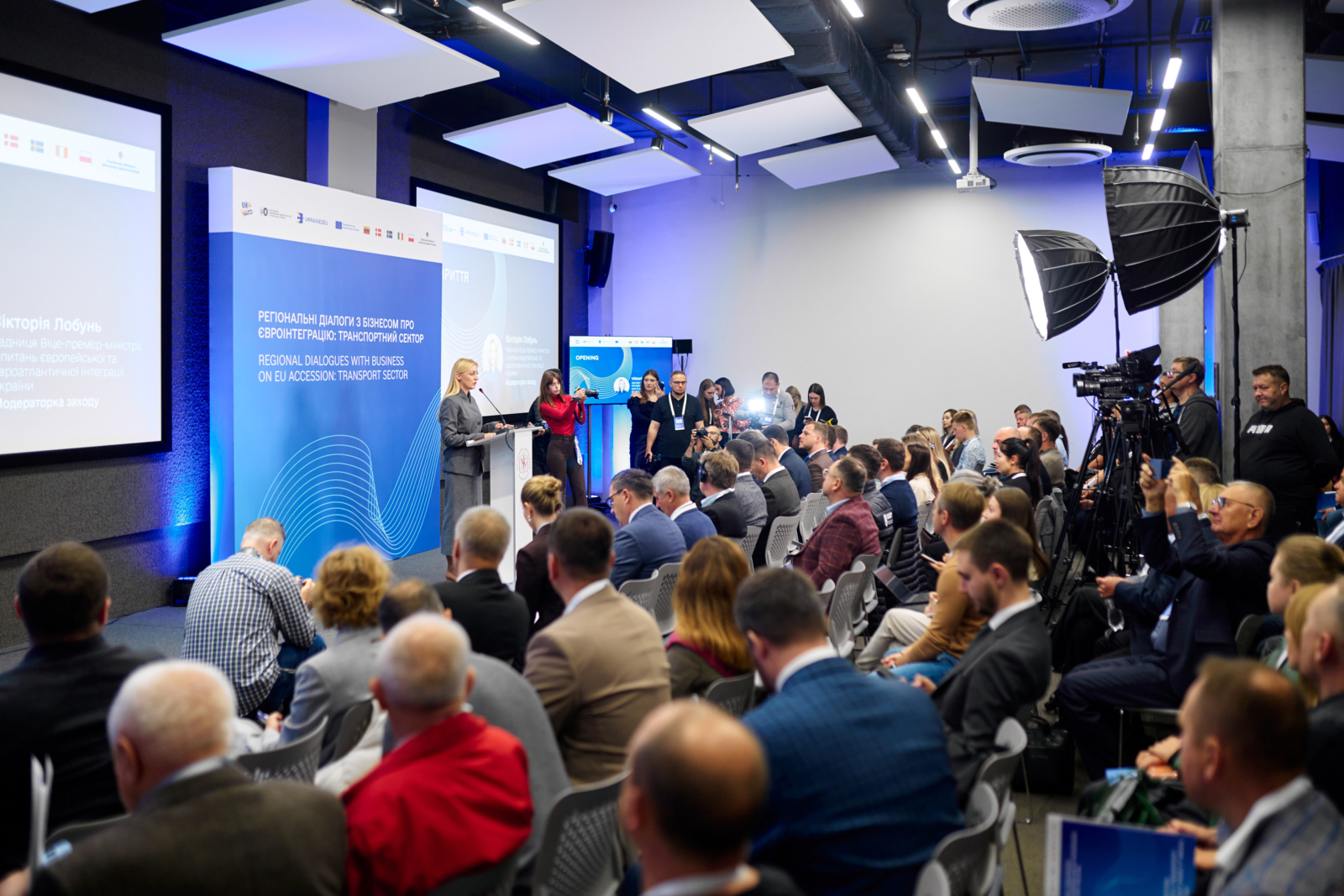
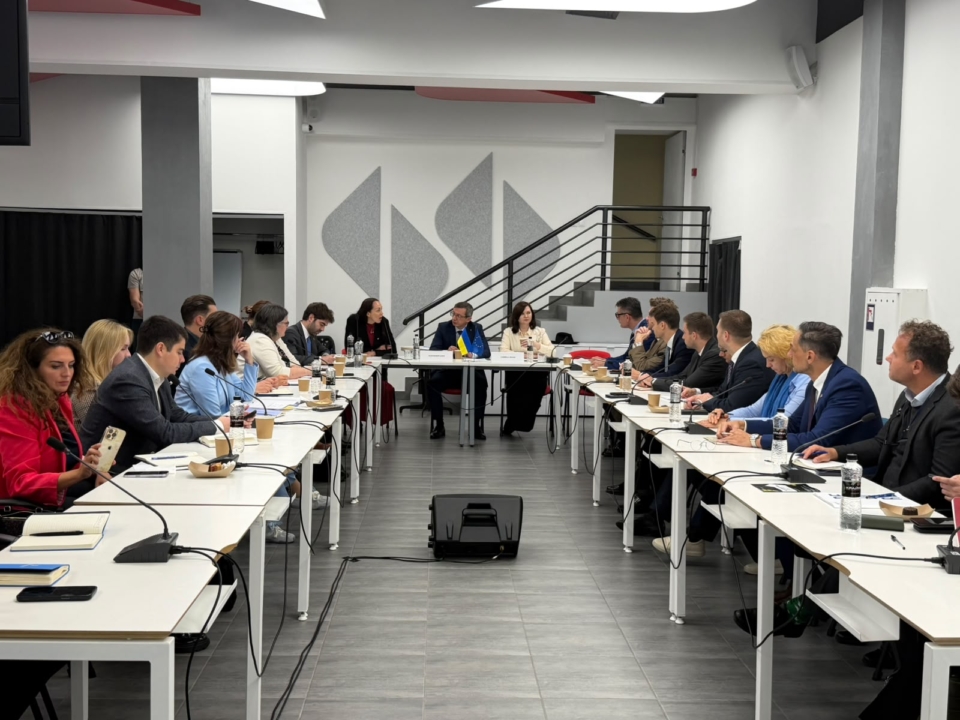
Regional dialogues between Government representatives and businesses on key expectations and challenges in the context of Ukraine’s European integration process are continuing. A meeting was held in Lviv to discuss the opportunities and challenges that this process presents for the transport sector.
Ukraine’s transport sector ensures export logistics and the daily mobility of Ukrainians amid the war. At the same time, the sector is integrating into the European Union’s common transport area. As Ukraine aligns its legislation with EU rules, practical changes are taking place in market access rules, requirements for transport operators, social standards, technical regulation and transport safety. Businesses need to understand the sequence and timing of these changes, have an opportunity to adapt their operations in advance, and discuss directly with government officials the practical issues arising in the course of European integration. To address these and other issues, the Office of the Deputy Prime Minister for European and Euro-Atlantic Integration of Ukraine, with the support of the Ukraine2EU Programme, is holding practical dialogues with representatives of key sectors of the Ukrainian economy.
During the meeting on 24 September, participants discussed concrete steps to implement EU integration-related rules covered by negotiating Chapter 14, “Transport Policy”, and Chapter 21, “Trans-European Networks”. The event brought together more than 100 representatives of transport companies, public authorities, international experts and regulators.
Key topics included: the pathway and conditions for Ukrainian businesses’ integration into the EU Single Market; regulatory procedures and timelines; support from the European Union; social standards and technical requirements for the transport sector; safety of freight and passenger transport; fleet renewal and the development of public service transport; and the role of local communities in the sector’s European integration.
“Our strategic goal is Ukraine’s full participation in the European Union’s common transport area and the adoption of common rules. An important part of this process is the development of the TEN-T transport corridors, which should ensure high-quality connections between Ukraine, EU Member States and the Single Market. These transport links already provide Ukrainian businesses with access to the European market. At the same time, it is important that Ukrainian businesses understand well in advance what changes lie ahead and have the opportunity to prepare for them. By the time full integration is achieved, our transport sector must be ready for both the competition and the new opportunities of the Single Market,” said Vsevolod Chentsov, Deputy Prime Minister for European and Euro-Atlantic Integration of Ukraine.
The Deputy Prime Minister also emphasised the importance of opening all negotiating clusters as soon as possible, including Cluster 4, which covers transport policy and trans-European transport networks and is crucial for Ukraine’s further integration into the EU transport area.
Ukraine’s integration into the EU’s common transport area will help improve transport infrastructure and strengthen logistics connectivity between Ukraine and EU Member States. At the same time, large-scale post-war reconstruction creates significant potential for investment in the transport sector — from fleet renewal and the development of border infrastructure to the introduction of modern technologies and European transport standards.
“European integration in the road transport sector means concrete changes in how Ukrainian transport operators work. We are already implementing some of the necessary measures, while the next steps will require preparation from both the Government and businesses. That is why it is essential for us to engage with transport operators while these changes are still being developed: to explain the rationale and timelines, hear their practical concerns, and work together to find solutions that will enable Ukraine’s transport sector to operate fully in the European market.” emphasised Mykola Kalashnyk, Minister for Restoration, Infrastructure and Transport of Ukraine.
European integration is already affecting the entire transport sector and covers issues such as stronger road safety standards, protection of passenger rights, appropriate working conditions and compliance with drivers’ driving and rest time rules, modern requirements for transport operators and vehicles, as well as the wider introduction of digital transport systems. Ukraine has already taken the first step towards implementing European rules by adopting Law No. 4337-IX. It introduces new requirements for transport operators: transport companies must demonstrate that they have an effective and stable establishment, professional competence, financial standing and good repute. In addition, the Law introduces the role of transport manager – a responsible person who organises transport operations, oversees compliance with legislation and must demonstrate professional competence. EU requirements concerning the monitoring of drivers’ driving and rest times are also already being implemented.
The next step should be the introduction of licensing for domestic freight transport. This will establish equal rules for all market participants, promote fair competition, reduce the shadow segment of the market and improve the quality of transport services.
“Full integration of the transport sector into the EU cannot be achieved without high-quality legislative work. It is important for us that the decisions adopted by Parliament are clear to businesses and take into account the realities in which Ukrainian transport operators work. This is why direct dialogue with the sector is essential already at the stage of preparing and implementing legislative changes. Our task is to consistently align Ukrainian rules with European ones while creating the conditions for Ukrainian transport operators to compete effectively in the EU Single Market.” said Yurii Kisiel, Chair of the Verkhovna Rada Committee on Transport and Infrastructure.
Lviv region, where the event took place, is crossed by key transport and logistics routes connecting Ukraine with the European Union. For this border region, European integration has a tangible dimension. The M-09 Ternopil–Lviv–Rava-Ruska road is currently being modernised, border infrastructure is being developed, and joint control mechanisms are being introduced. One of the key areas of work is the development of the European-standard 1,435 mm railway gauge. The European Commission has provided €73.5 million in grant funding under the Connecting Europe Facility for the first phase of the Mostyska II–Sknyliv project. This is another step towards improving rail connectivity with the EU, creating new opportunities for passengers and exporters, and reducing pressure on road border crossing points.
“For the Lviv region, European integration in the transport sector means concrete changes in infrastructure, the operation of border crossing points, rail connections and logistics, aimed at making the movement of people and goods faster and more efficient. At the same time, infrastructure is only one part of this process. Businesses need clear rules, predictable logistics, faster border crossings, sufficient capacity and access to European financial instruments. This is precisely why dialogues like this matter: the state must not only implement European rules, but also listen to the businesses that will operate under them,” emphasised Maksym Kozytskyi, Head of the Lviv Regional Military Administration.
Holding dialogues with businesses at the regional level helps translate the European integration process into concrete decisions and opportunities for Ukrainian companies. The initiative creates a structured space where business representatives can share their views, ask practical questions and better understand how European integration affects their operations, planning and future development.
Jakob Ulrich, Lead Expert on Communication and Civil Society Engagement at the Ukraine2EU Programme, said: “EU accession is not only about aligning legislation; it also requires Ukrainian companies to be ready to operate under new rules. That is why it is important to engage with businesses now on the changes ahead, the challenges they may face, and the solutions that can help them adapt to EU market requirements. Regional Dialogues allow us to hear directly from companies in the regions and ensure that their first-hand experience informs Ukraine’s preparations for EU membership. This is exactly the kind of open and practical engagement that Ukraine2EU is committed to supporting.”
Despite the war, Ukrainian businesses continue to integrate into the EU Single Market. For the transport sector, this pathway means a higher level of safety and stronger protection of passengers’ and drivers’ rights, as well as clearer rules and the benefits of the EU’s common transport area for Ukrainian transport operators.
The event was organised by the Office of the Deputy Prime Minister for European and Euro-Atlantic Integration of Ukraine together with Ukraine2EU, the European Union’s flagship programme supporting Ukraine’s preparations for EU accession and future EU membership.