Ukrainian Pharmaceutical Sector Adapts to EU Standards Despite the War as Government and Business Continue Dialogue on EU Accession
05.06.2026
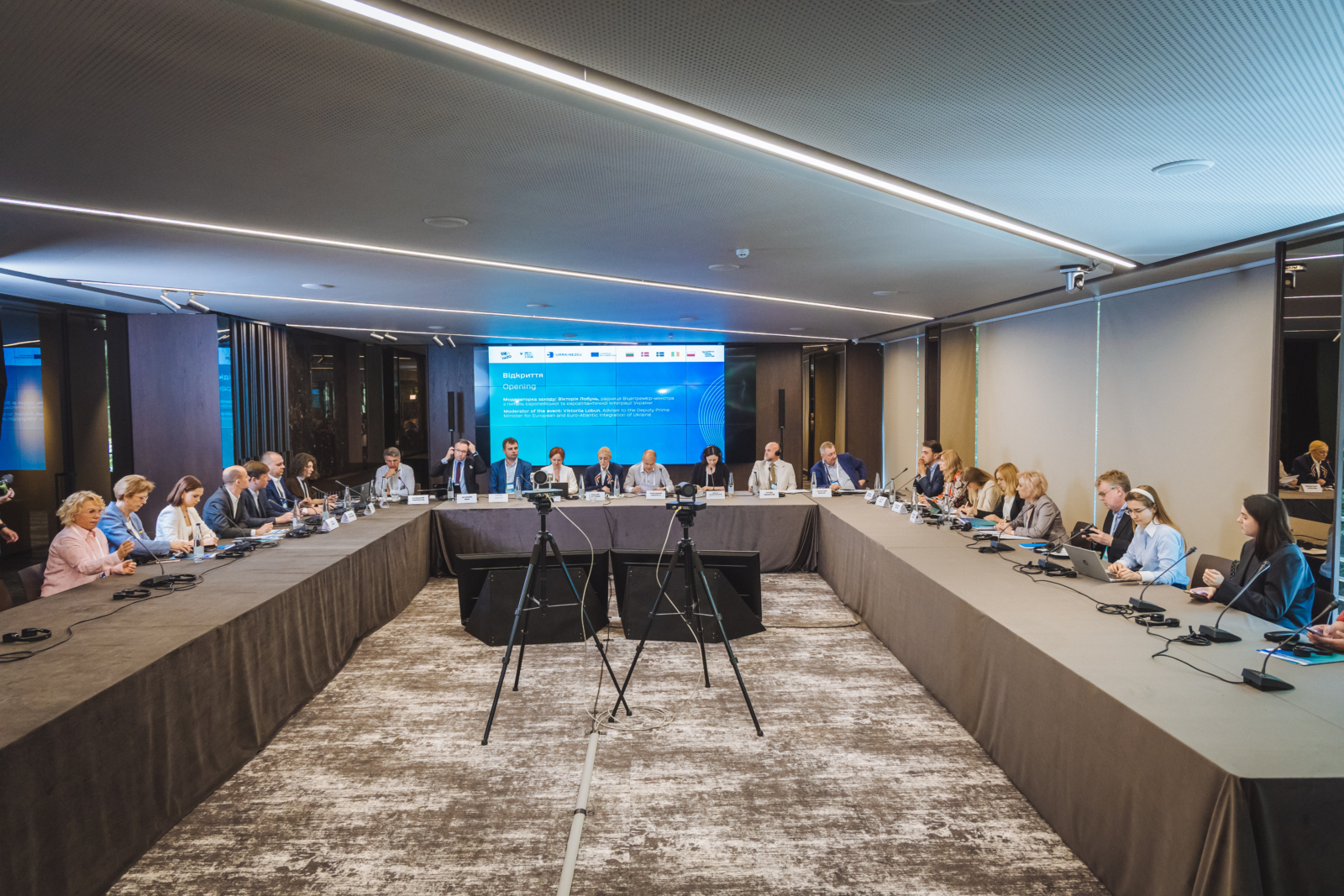
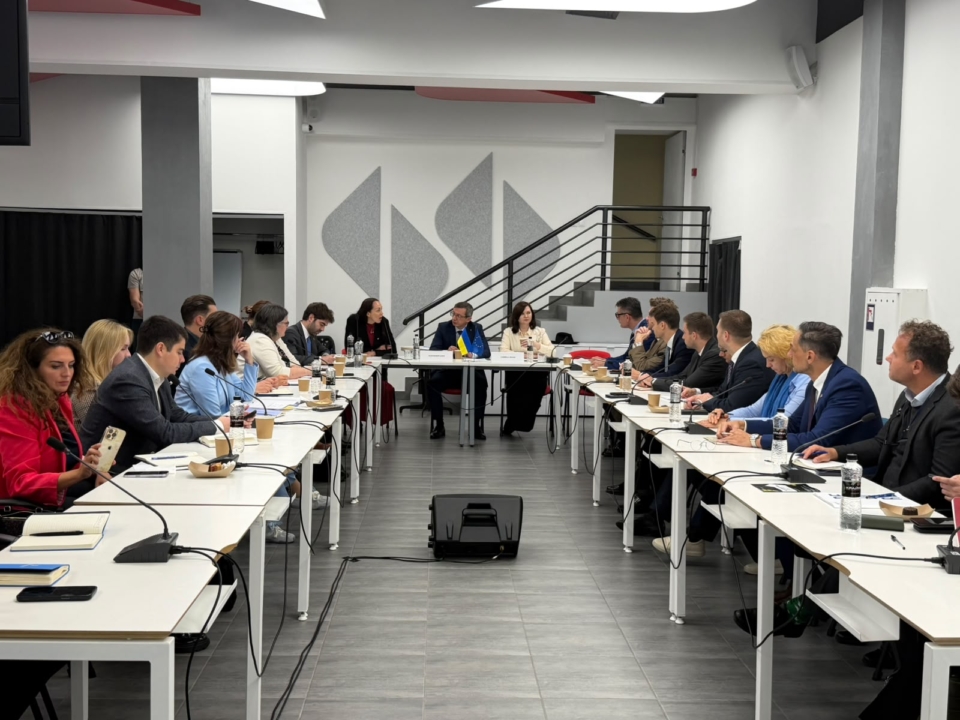
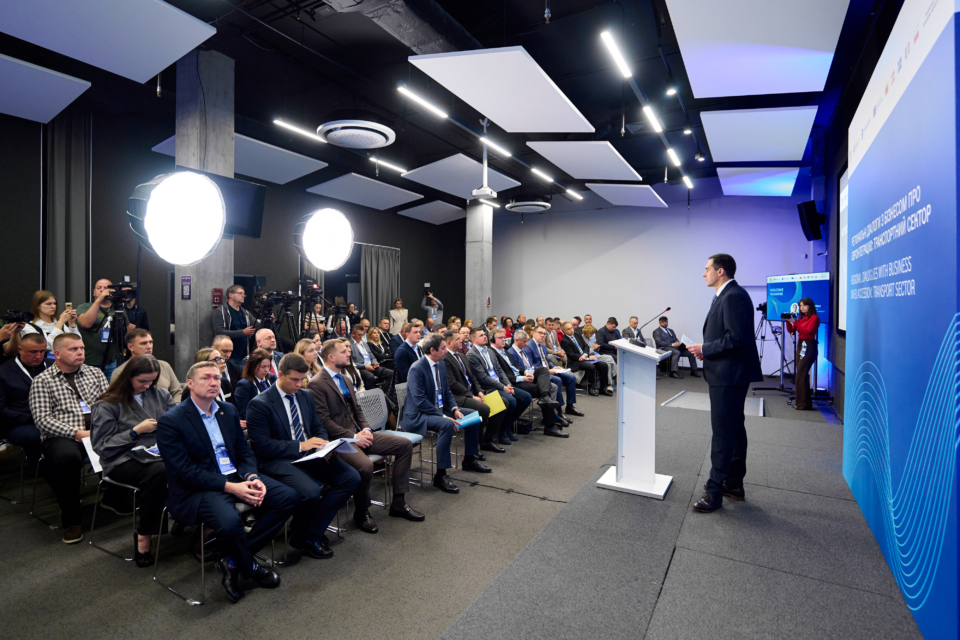
Regional dialogues between the Government and the business community on Ukraine’s EU accession are continuing across the country. The meeting held on 4 June 2026 in Zakarpattia, was dedicated to the opportunities and challenges facing the pharmaceutical sector in this process. Senior representatives of pharmaceutical manufacturers and distributors had the opportunity to engage directly with Ukrainian government officials, representatives of EU institutions, and industry experts.
Integration into European Union markets opens new opportunities for Ukrainian businesses. At the same time, companies that are adapting to EU standards while operating under the pressures of war require government support, regulatory clarity, and confidence that their competitiveness can be maintained. It is for this reason that the Office of the Deputy Prime Minister for European and Euro-Atlantic Integration of Ukraine, with the support of the Ukraine2EU programme, is organising a series of practical dialogues with representatives of key sectors of the Ukrainian economy.
Discussions in Zakarpattia focused on regulatory procedures, legislative alignment timelines and institutional capacity; the modernisation of pharmaceutical manufacturing; the Critical Medicines Act; and Ukraine’s integration into European pharmaceutical supply chains.
‘From a business perspective, any new requirement can often be perceived as an additional cost. However, the transition to European rules should be viewed as an investment in one’s own development rather than an obstacle. Operating in the EU market requires investment in equipment, certification, and workforce skills, but at the same time it provides access to one of the world’s most attractive markets. For the pharmaceutical sector, requirements such as GMP compliance, 2D coding, and other European standards are, above all, investments in the development of manufacturing capabilities. We do not see these requirements as a threat to the business models of Ukrainian manufacturers; on the contrary, they create new opportunities for growth and integration into the European market,’ Taras Kachka, Deputy Prime Minister for European and Euro-Atlantic Integration of Ukraine, stated.
Ukraine is actively implementing regulatory standards harmonised with EU requirements, including Good Manufacturing Practice (GMP). The European Commission noted the substantial progress made by Ukraine as an EU accession candidate during the bilateral screening under Chapter 28 ‘Consumer Protection and Public Health’. Ukraine’s principal tasks at this stage are the full alignment of its regulatory framework with EU requirements and the transition to a modern, effective system of state control.
‘We increasingly speak of Ukraine as a future partner of the European Union, capable of contributing to a shared healthcare system. The pharmaceutical sector is one of the finest examples of this potential. Ukrainian manufacturers operate to high quality standards, invest in development, and demonstrate resilience even during a full-scale war. At the same time, successful European integration requires ongoing dialogue between the state and the business community. It is for this reason that we are systematically aligning our legislation with the EU acquis, working to establish a modern state regulatory authority that will commence operations on 1 January 2027, and implementing European approaches to medicines regulation. Our objective is to ensure clear rules, predictable regulatory changes, and conditions under which adaptation to EU legislation will not only facilitate integration into the single market but also preserve the competitiveness of the Ukrainian pharmaceutical sector,’ Maryna Slobodnichenko, Deputy Minister of Health of Ukraine for European Integration, said.
Ukraine’s pharmaceutical sector comprises more than 50 large and medium-sized manufacturing facilities and over 15,000 registered medicinal products. Despite the war, the pharmaceutical sector has preserved its production capacity, innovation potential, and domestic demand. Companies have demonstrated a high degree of resilience and adaptability, rapidly restoring supply chains to ensure uninterrupted access to medicines. Six Ukrainian manufacturers have joined the EU Alliance on Critical Medicines — an initiative designed to address shortages of essential medicines across Europe.
‘The Ministry of Economy considers the pharmaceutical and biotechnology sectors to be among the priority high-tech areas for the development of Ukraine’s economy and future exports. Ukraine has a well-developed manufacturing base, skilled workforce, competitive production costs, and a favourable location close to the EU market. This creates real opportunities for integrating Ukrainian companies into European and global supply chains for medicinal products and active pharmaceutical ingredients. Our goal is for Ukraine to become one of the key European hubs for pharmaceutical manufacturing, research, and innovation,’ Vitalii Kindrativ, Deputy Minister of Economy, Environment and Agriculture of Ukraine, stated.
In the context of the EU’s active efforts to diversify pharmaceutical supply chains, Ukraine can become a reliable partner in strengthening the resilience of these chains. In addition, Ukraine’s investment attractiveness can also be considered in the context of the opportunities opened up for investors by the post-war reconstruction and modernisation of the healthcare system.
‘Holding Regional Business Dialogues in Zakarpattia is both an important and symbolic step. In the context of the war, the region holds strategic significance as a key logistics hub with access to the borders of four EU Member States. Its location enables manufacturers to be closer to European markets and reduce the costs of transporting both raw materials and finished products. For our part, we are working to expand these opportunities for businesses through continued infrastructure development,’ Myroslav Biletsky, Head of the Zakarpattia Regional Military Administration, stated.
Regional dialogues with business held at the regional level help translate the EU accession process into clear decisions and opportunities for Ukrainian companies. The initiative provides a structured platform for businesses to share their views, raise practical questions, and gain a better understanding of how European integration affects their operations, strategic planning, and future development.
‘Preparing for EU membership requires a clear view of how new rules will work in practice and affect day-to-day operations. That’s why structured dialogue with business is essential. It gives companies an opportunity to raise practical questions early and helps the government better understand sector-specific concerns. Ukraine2EU supports this initiative because engagement with business makes the accession process more informed and better connected to needs on the ground,” said Mantė Makauskaitė, Ukraine2EU Team Leader.
The event was organised by the Office of the Deputy Prime Minister for European and Euro-Atlantic Integration of Ukraine together with Ukraine2EU, the European Union’s flagship initiative supporting Ukraine’s preparations for EU accession and future membership.